I was born in Patna, Bihar, in my grandparents’ house, which Nana and Nani built as a sanctuary for our family, a home with open doors that housed many of my aunts and uncles in their transitional periods of life. My grandfather, Phani Bhushan Prasad, named me Prerna, which means inspiration, and named Mummy and her siblings alliterative names – Shila Smriti, Shekhar Suman, Namrata Nandini, Kshamata Shalini – so as to not have them associated with their caste later in life. My Nani, Usha Prasad, was the matriarch of the family – from an early age, she assumed the role of wife and mother, and took the weight of caretaking for our family on her shoulders.
My parents – Shila and Sanjaya Srivastava – had my brothers early in their marriage (I came later as a surprise!), and we spent our childhoods between Bombay and Patna…until one fateful day when Papa got his greencard, and my parents, on a whim, decided to leave everything they had built in India, and moved to the US with us, a journey that now, my mother calls “foolhardy,” a journey that changed the trajectory of our lives forever.
Growing up as a first-generation Indian-American immigrant in the 90s was, at times, a painful experience – teachers assuming I didn’t speak English (or telling me they were surprised by “how well” I spoke English), kids taunting me to “go back to my country,” or teasing me for “smelling like curry,” longing to be blond haired and blue eyed so boys in my class would like me, feeling lanky and awkward, and not knowing who I was, or where I belonged, but desperately wanting to fit in somewhere.
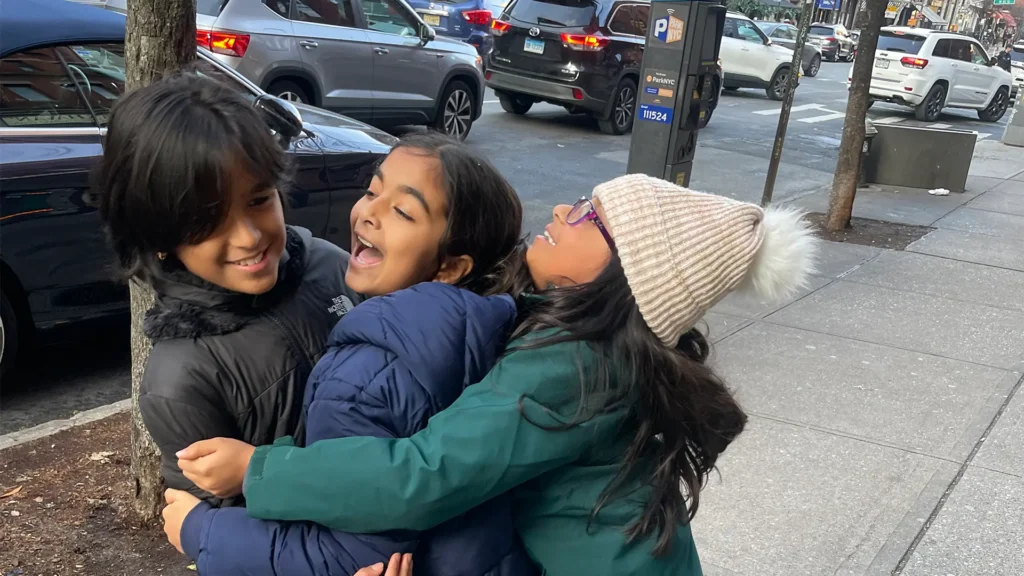
Now, more than 30 years later, I’m the mother of three kids – ages 10, 7, and 6 – Zurisaday, Zaviaan, and Zeydaan – and the questions my husband, Anoop, and I ask ourselves are, “What legacy do we want to leave for our kids? What kind of world do we envision our kids inheriting? And what are we willing to do to make that world a possibility for them?”
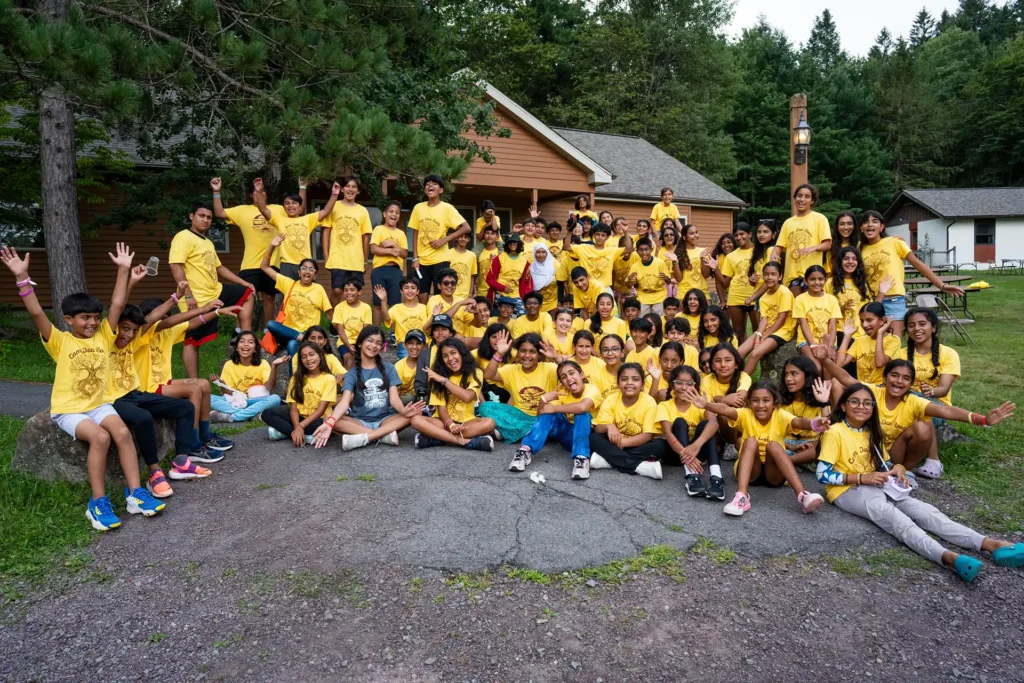
That’s why we started Camp Desi Roots. Because both of us struggled to see ourselves growing up, and found ourselves shrinking, erasing, or compartmentalizing ourselves in order to fit into the shape of others…so we could call ourselves “American.” We didn’t start to come to terms with who we were, in its beauty and complexity, until later in life, well into adulthood, after our grandparents had passed away, after we realized what we had lost with their passing, in the silence and emptiness that followed, regrets that we hadn’t asked them more questions or had more conversations that started with, “tell me about….” When we looked at our kids, we wanted to imagine a different world where they felt empowered to be themselves, unapologetically, without shrinking or seeking permission.
We wanted to imagine a world where our kids could eat dosa for lunch and pizza for dinner, where they could bring homemade halwa to school as a treat without feeling ashamed, where they sought out childhood and migration stories from their own Nani and Nana / Awa and Thatha, and became storytellers themselves. We imagined our kids being healers of the divides in our diaspora community – of transcending boundaries not created by them, and weaving together communities otherwise torn apart by decades of conflict, simply through empathy, understanding, and enduring friendship.
That’s how Camp Desi Roots started. As a dream that Anoop and I had as parents, just as my parents did for us, dreams of our children making themselves, and in turn, the world more just, more loving, and more whole.